

The Hardest Lesson in Building Partnerships
01 May 2026


Redmond Orme
Fractional Global Partner Director | Scaling B2B SaaS & eCommerce | Channel Strategy & GTM Specialist | Consultant @ Cloud and Commerce
Share with your community!
Part 5 - The Hardest Lesson in Building Partnerships
Why Trust Is the Real Growth Lever
Trust in partnerships is often described as something cultural — soft, relational, or intangible. In reality, it is far more practical than that. Within partner ecosystems, trust is highly commercial and highly operational.
Partners value their customer relationships far above their vendor relationships, and for good reason. Their brand is on the line when they introduce a technology partner into a customer conversation. Their revenue is tied to the success of the solutions they recommend. Their reputation depends on whether that solution ultimately delivers value. Because of that, the question of trust is never abstract. It is tied directly to how the partnership functions in practice.
In most ecosystems, partnership success ultimately comes down to three simple questions. Can the partner make money from the relationship? Can they trust the vendor in front of their customer? And will that relationship still be protected once the deal is signed?
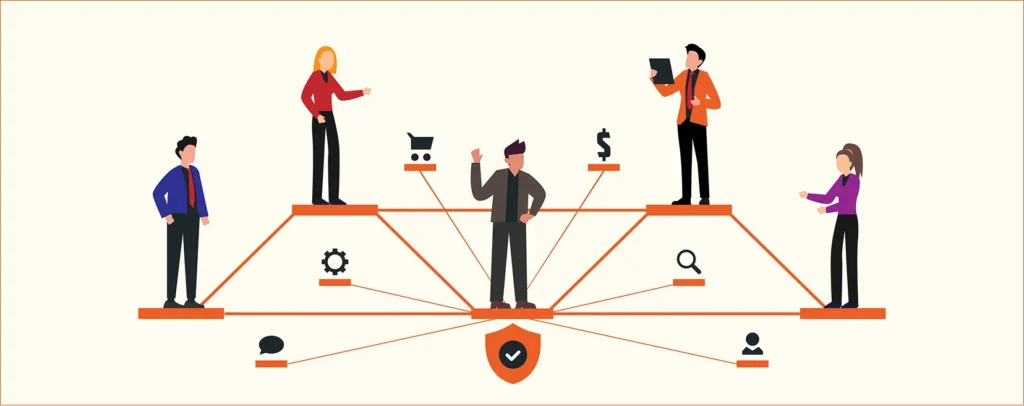
The first of these is economic trust.
Before anything else, partners need to believe that the commercial model is credible. This goes far beyond the presence of a rebate or incentive structure. Partners look for evidence that margins are real, that opportunities are repeatable, and that the vendor is committed long enough for their investment to pay off. If those fundamentals are not convincing, no amount of enablement or relationship management will compensate. Commercial integrity is the foundation on which everything else is built.
The second dimension is execution trust,
and this is where most value is created — and where most trust is tested. When a partner introduces a vendor into an opportunity, they are effectively putting their own credibility in front of the customer. They need confidence that deal registration will be respected, that the vendor will not attempt to take control of the account, and that collaboration during the sales cycle will be transparent and predictable. Co-selling is often framed as a set of processes, but in practice it operates more like a trust exercise. If partners hesitate to involve a vendor in opportunities, the issue is rarely procedural; it usually reflects uncertainty about how the vendor will behave when the stakes are highest.
The third dimension is delivery trust.
The reputational risk for partners often peaks after the contract has been signed. Implementation capability, support responsiveness, and customer success maturity all shape whether the customer experience strengthens the relationship or damages it. When delivery fails, it is usually the partner who absorbs the reputational cost first. For that reason, post-sales capability should not be viewed simply as an operational function. It is an integral part of how trust is sustained inside the ecosystem.

In practice, trust rarely breaks because of bad intentions. It erodes through friction. Pricing approvals stall, deal registration becomes ambiguous, escalations disappear into internal silos, and responsibilities blur between sales and alliances teams. Each of these issues may appear minor in isolation, but over time they accumulate into a pattern that makes collaboration feel unreliable.
Partners tend to measure trust less by what vendors promise and more by how easy they are to work with. Ecosystems that feel seamless naturally build confidence. Ecosystems that feel complicated or unpredictable quickly create doubt.
For that reason, the strongest partnerships tend to share several structural characteristics. Accountability is clear, so everyone involved understands who owns each stage of the commercial and delivery process. Responsibilities are defined across sales, alliances, and post-sales teams so that partners know where decisions sit. Governance exists not as bureaucracy but as an enabling framework that provides shared pipeline visibility and effective escalation paths. And communication happens with a predictable cadence, creating confidence that issues will surface early and be resolved quickly.
These elements can appear operational rather than strategic, but in reality they form the infrastructure that allows trust to scale. Enablement can drive engagement, data can improve clarity, and alignment can increase efficiency. But trust ultimately determines whether partners choose to invest in the relationship.
Without trust, partners experiment. With trust, they commit.
And it is that commitment that allows ecosystems to mature — commercially, operationally, and strategically.
In an industry increasingly focused on automation, scale, and capital efficiency, it is tempting to assume that tools and platforms are the primary drivers of ecosystem performance. In practice, the most durable ecosystems are still built on something much simpler.
Not emotional trust.
Operational trust.
Next in the series: The rise of the hybrid partner.
- Part 1 - Enablement Drives Execution. That’s What Unlocks Partner Growth.
- Part 2 - GTM Alignment Without Burning Out Partner Teams
- Part 3 - Data That Drives Action
- Part 4 - The Real Shift: From GTM to GTWe
- Part 6 - The Rise of the hybrid partner
- Part 7 - Why the Next Decade Belongs to the Partner Ecosystem
Looking to enter or growing in new markets?
