Fractional Global Partner Director | Scaling B2B SaaS & eCommerce | Channel Strategy & GTM Specialist | Consultant @ Cloud and Commerce
Share with your community!
Part 2 - The Broken Model
“Composable” was one of the more seductive ideas the SaaS industry produced.
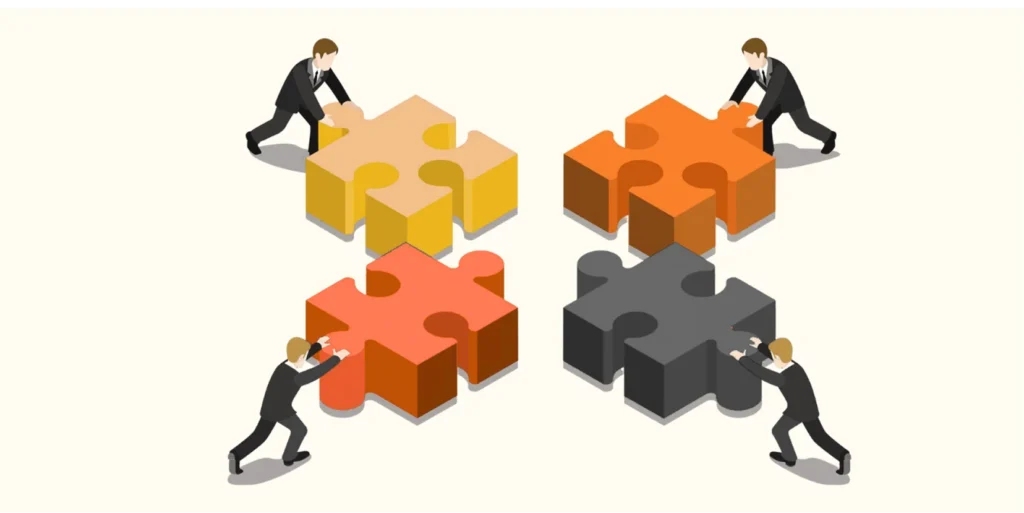
The pitch was intuitive: rather than locking yourself into a single monolithic platform, you’d assemble the best tool for each job. Best-in-class CRM. Best-in-class marketing automation. Best-in-class data warehouse. Connect them together, and you’d have a technology environment that was both flexible and powerful — one that could evolve as your business did.
For a certain kind of organisation, with the right technical resources and enough time, it worked. And it’s worth giving the idea its due — the instinct behind it was sound. Flexibility matters. Avoiding lock-in matters. Building something that reflects how your business actually operates, rather than how a vendor imagined it would, is a genuinely worthwhile goal.
The gap was between the theory and the lived experience of most buyers.
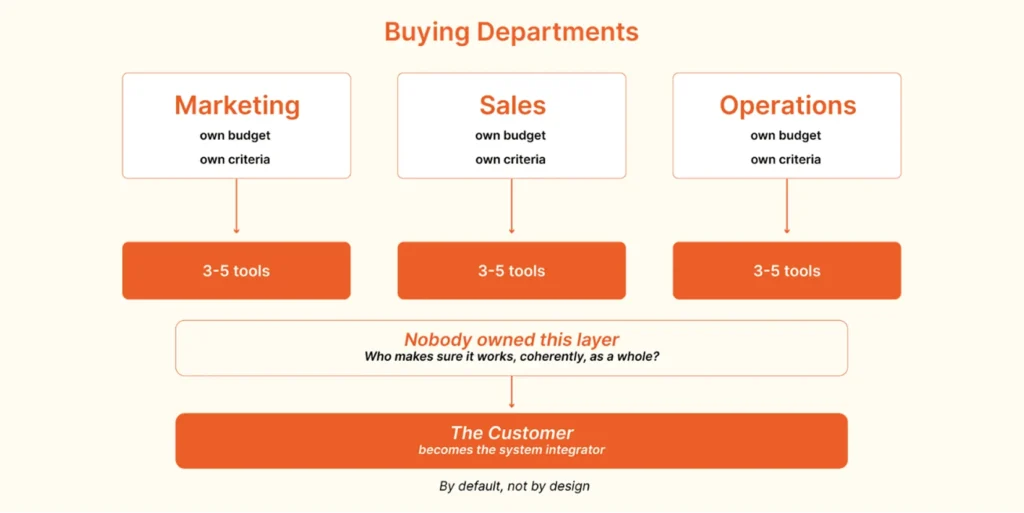
Because in practice, composable stacks didn’t feel flexible. They felt fragmented. Integration projects that were scoped for three months ran for eighteen. The connective tissue between systems — the middleware, the custom APIs, the data pipelines — became infrastructure in its own right, requiring its own maintenance, its own expertise, its own budget line. Vendor relationships multiplied. Renewal cycles stacked up. And the question of who actually owned the environment — who was responsible for making sure it worked, coherently, as a whole — rarely had a clean answer.
The GTM model amplified the problem. Vendors sold into different parts of the organisation. Marketing bought its tools. Sales bought theirs. Operations bought theirs. Each purchase made sense in isolation, evaluated against its own criteria, approved by its own budget holder. Nobody was looking at the full picture, because nobody’s job description included the full picture.
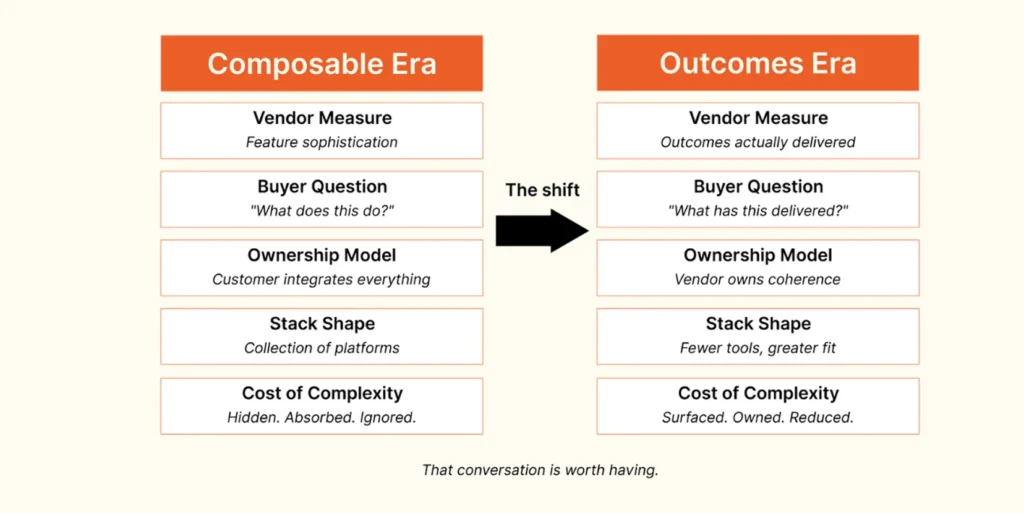
What got built, in a lot of organisations, wasn’t a platform. It was a collection of platforms — loosely connected, inconsistently adopted, and increasingly expensive to maintain. The promise of composability quietly became the reality of sprawl.
None of this was malicious. The vendors were selling what they knew how to build. The buyers were buying what they knew how to evaluate. The market rewarded specialisation, and so the market got specialists — lots of them, each solving a narrow problem well, and leaving the broader problem of coherence to someone else.
That someone else turned out to be the customer.
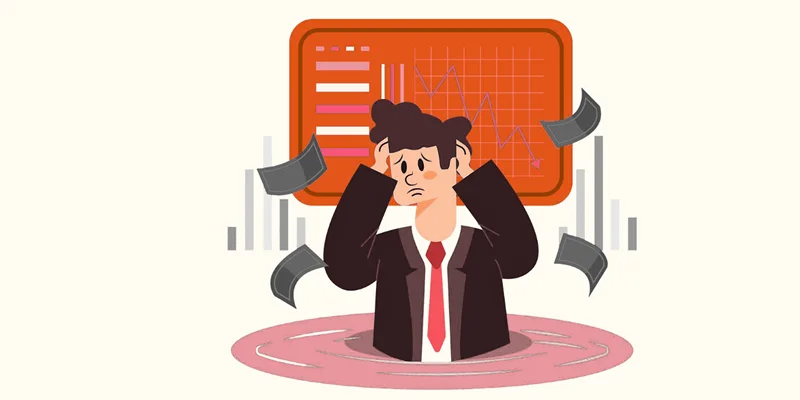
What’s shifting now is the recognition that connection doesn’t equal cohesion. That buying the right components isn’t the same as having something that works. That an API integration is not a solution, and generic middleware is not performance, and a pile of best-in-class tools without coherent ownership is not a platform — it’s a maintenance burden with a good sales deck.
The composable era produced a lot of sophisticated software. What it didn’t produce, reliably, was outcomes.
That distinction is becoming harder to ignore. And for buyers who’ve spent years managing complexity they never asked for, it’s also becoming the basis for a different kind of conversation with their vendors.